Georgia
-
How Medicaid expansion has candidates divided on health care
The Gainesville Times By: Joshua Silavent The debate over whether to expand Medicaid to more low-income individuals and families in Georgia has gained new life this election year as health care is once again a focal point in races for governor and congress. And a new study from Georgetown University’s Center for Children and Families…
-
New Podcast Spotlights Barriers to Health Care for Georgia’s Children
Voices for Georgia’s Children has launched an inaugural podcast series — Challenges for Children – focused on barriers to health care for children. In April 2018, the Voices for Georgia’s Children team set out to find out why so many of their state’s children were being left behind. Team members traveled to Whitfield, Dougherty, Effingham,…
-
Medicaid expansion would benefit rural areas the most, report says
Georgia Health News By: Andy Miller The potential impact from Medicaid expansion would be bigger in rural Georgia than in urban areas of the state, according to a new report released Tuesday. Medicaid expansion would benefit low-income people across the state, said the report, by Georgetown University’s Center for Children and Families and the University…
-
State Medicaid and CHIP Snapshots, 2018
The Georgetown University Center for Children and Families (CCF) and the American Academy of Pediatrics (AAP) created factsheets underscoring the importance of Medicaid in providing coverage for children in all 51 states (including the District of Columbia). Sources are available here. Previous snapshots can be found here.
-
Nationwide Rate of Uninsured Children Reaches Historic Low
Nationwide 95.5 percent of children had health insurance in 2016, up from 95.2 percent the previous year—and up from 92.9 percent in 2013, the year before the ACA was fully implemented. While relatively few children rely on the ACA’s Marketplace for insurance, many gained coverage in Medicaid or CHIP when their parents signed up for…
-
Section 1115 Medicaid Waiver Comments
Georgetown University’s Center for Children and Families contributes an independent perspective to the public dialogue on the future of Medicaid through the lens of children and their families.
-
Medicaid’s “Welcome Mat” Effect Means Medicaid Expansion Helps Children Get Health Coverage
New research in the journal Health Affairs this month gives even more evidence for a parental “welcome mat” effect that increases health coverage among children already eligible for Medicaid or the Children’s Health Insurance Program when their parents become eligible as well. Simply put, moving to “whole family coverage” through a state Medicaid expansion or…
-
State CHIP Snapshots
The Role of CHIP in Children’s Coverage In 2016 the children’s health insurance coverage rate in the United States dropped to just above 95 percent, an impressive achievement. Key to this success is the Children’s Health Insurance Program, which provides coverage to children who do not qualify for Medicaid but whose families cannot otherwise afford…
-
Top 10 Rural Counties With Largest Share of Kids and Adults Relying on Medicaid to Meet Health Needs
Using data from our Rural Health Policy Project, we just took a look at the counties across the country that have the highest percent of children and adults relying on Medicaid for their health care. As readers of SayAhhh! know, our study found that children living in small towns and rural areas are significantly more…
-
INTERACTIVE MAPS: Children Covered by Medicaid and CHIP by county, state or congressional district.
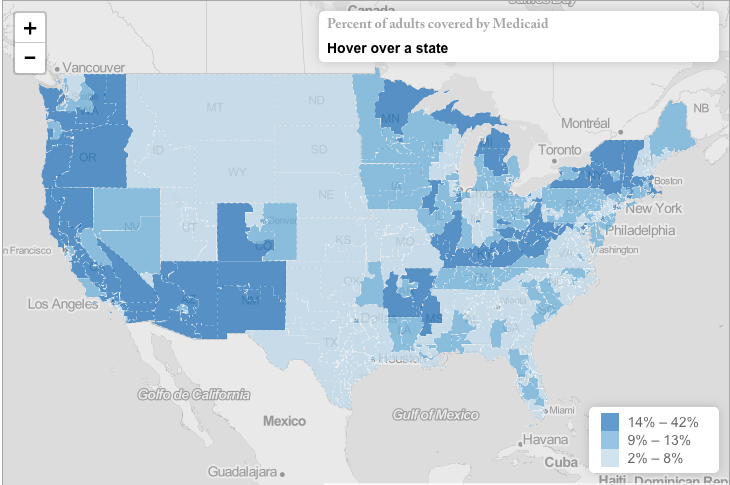
These maps show how many children are covered by Medicaid in each county and congressional district. Visit these links to view the maps, and to download handouts on your state’s coverage data: Percent of Children Covered by Medicaid/CHIP (congressional district) Percent of Children Covered by Medicaid/CHIP (county) Visit CCF’s State Resource Center for state-level data on health…
-
Missing Out On New Health Coverage: Four States Where The Debate Around The GOP’s Health Care Bill Is Hurting Efforts To Close The Medicaid Coverage Gap
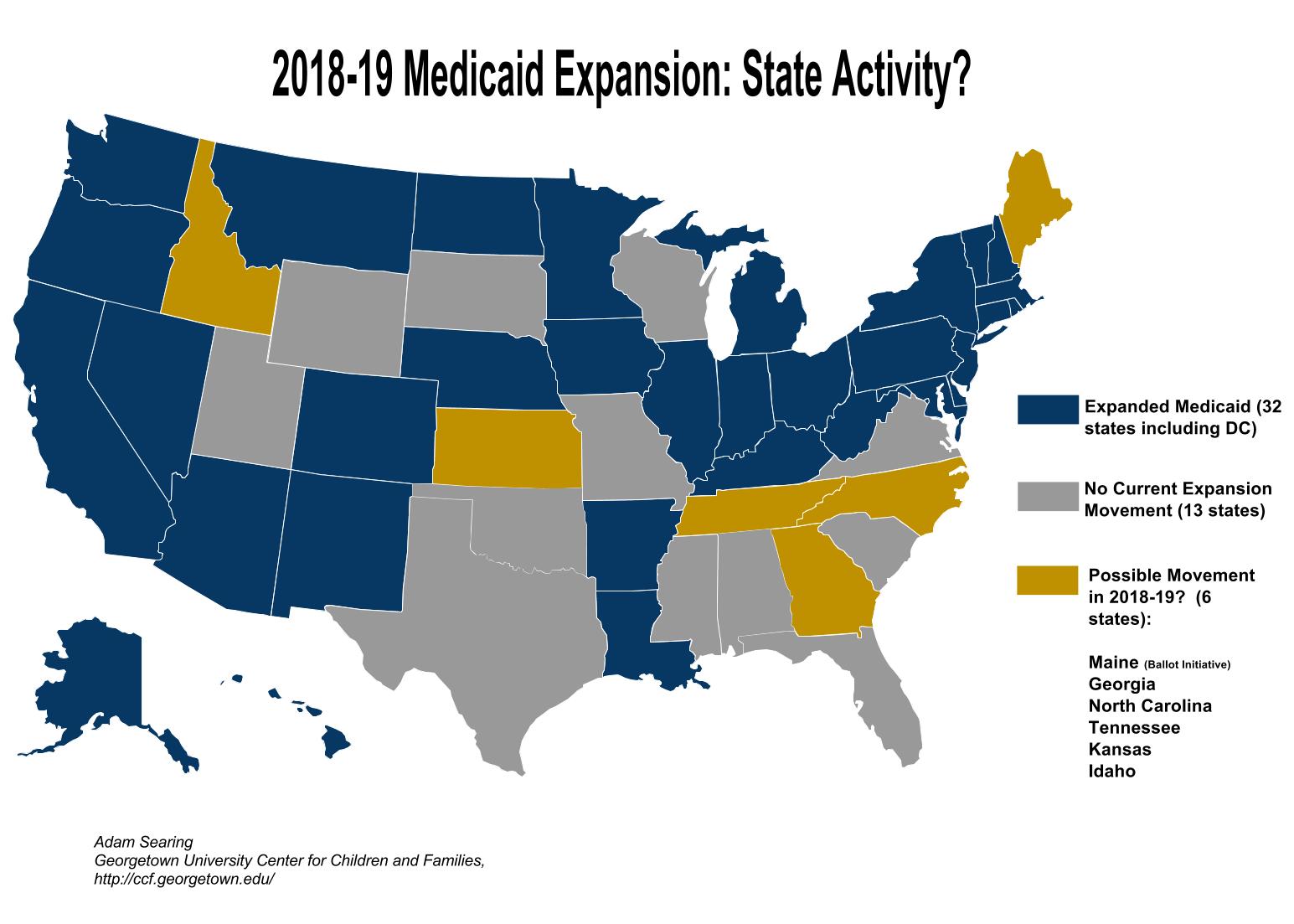
While the ultimate outcome for the GOP health care bill is unclear here in Washington, the uncertainty created by the legislation is already having an adverse effect on attempts to expand coverage in four states. Idaho, Georgia, Tennessee, and Kansas all have had robust discussions over the past year about joining the other 32 states…
-
Report Suggests Improved Outreach and Enrollment Efforts Directed at Very Poor Parents Needed
As I was flying back from Atlanta the other night, I read a fascinating new paper by researchers at the Urban Institute (a team led by the esteemed Genevieve Kenney), which looks at adult uninsured rates and participation rates in Medicaid. In particular, the researchers examine how the number of uninsured parents and childless adults…
-
Many working parents in Georgia would benefit from closing health coverage gap
by Cindy Zeldin, Executive Director, Georgians for a Healthy Future It’s often assumed that if you have a job, you have health insurance. That’s not the case for many working families in Georgia, though, because our state leaders haven’t accepted the federal funding set aside for us to extend cost-effective Medicaid coverage to more uninsured…
-
Open Enrollment 2: Experts Answer Tough Questions and Offer Advice to Help Navigators and Consumer Assisters
This week, Georgetown University experts from the Center on Health Insurance Reforms and the Center for Children and Families released a report from their ongoing project to support Navigators and consumer assisters. The project, supported by the Robert Wood Johnson Foundation, provides Navigators and other in-person assisters in six states – Arkansas, Arizona, Florida, Georgia, Michigan,…
-
Infographic: Southerners More Likely to be Poor, Uninsured and Live in a State that Denies Them Medicaid
A new infographic from the Kaiser Family Foundation this week lays out some of the ironies of the decision by many southern states not to accept federal money to expand Medicaid health coverage to their lowest-income citizens. With higher rates of poverty and adults more likely to be uninsured, the need for affordable coverage is…
-
Many Southern States Miss Opportunity to Address Health Disparities
By Tara Mancini A new report from the Kaiser Commission on Medicaid and the Uninsured (KCMU) indicates that a little more than half (53%) of uninsured people of color have family income at or below 138% and therefore should qualify for Medicaid in 2014 as the ACA originally intended. Yet, almost a third (30%) of…
-
Children’s Coverage on the Eve of the Affordable Care Act
Here’s a good news story on health coverage that the public is largely unaware of. The number of uninsured children continues to decline to historic lows – a remarkable accomplishment given the high childhood poverty rate and tough economic times. Yet a majority of Americans are unaware of this achievement. In a poll CCF commissioned…
-
Children’s Health Coverage on the Eve of the Affordable Care Act
Georgetown University Center for Children and Families researchers analyzed health insurance data from the Census Bureau’s annual American Community Survey to get a closer look at children’s coverage trends. On the eve of the implementation of the Affordable Care Act coverage expansions, the authors found important lessons from the success the U.S. has had in covering children. The number of uninsured…
-
Under Pressure: An Update on Restrictive State Insurance Marketplace Consumer Assistance Laws
By Justin Giovanelli, Georgetown University’s Center on Health Insurance Reforms To help consumers enroll in the recently opened health insurance marketplaces, the Affordable Care Act created outreach and consumer assistance positions such as “navigators,” in-person assisters, and certified application counselors. Though they are subject to uniform federal standards, in practice, these programs range widely from…
-
Kaiser Report Finds More Than 5 Million Will Fall Into Coverage Gap Created by States Failing to Expand Medicaid
A federally-funded Medicaid option for more uninsured adults is an important cornerstone of the Affordable Care Act, however, an estimated 5,161,820 uninsured individuals will be left behind because they live in states that have not yet accepted the Medicaid expansion option. Those who fall into the gap earn too much to qualify under their state’s…