Research & Reports
-
What Will Florida’s “Medicaid Choice” Waiver Proposal Mean For Children?
On October 19, 2005, Florida received approval for a Section 1115 Medicaid Choice proposal from the federal government, moving the Medicaid program to a premium-based system, among other things. This issue brief summarizes how these changes affect children as it is implemented, first in two counties and then across the state.
-
Children’s Health in the Balance: What’s At Stake for Children in the Congressional Budget Debate over Medicaid
This issue brief compares the House of Representatives and Senate versions of the fiscal year 2006 budget bill. Both versions limit federal health care spending, but in very different ways that would have profound consequences for children. The implications of these budget proposals are discussed in detail. President Bush signed into law a final fiscal…
-
A Summary of Federal Medicaid Cost-Sharing and Premium Standards: Current Law v. The House Budget Bill
By Jocelyn Guyer This brief provides a comparison of federal Medicaid rules governing premiums and cost-sharing in effect as of November 2005 with those proposed in the fiscal year 2006 House of Representatives budget bill passed on November 15, 2005. The House bill gives states new flexibility to vary premium and cost-sharing charges by group…
-
Six Million Children on Medicaid Could Be Subject To Dramatically Higher Premiums and Cost-Sharing Charges under the House Budget Bill
By Jocelyn Guyer This issue brief focuses on premium and cost-sharing changes in the fiscal year 2006 House of Representatives budget bill passed on November 15, 2005. The bill gives states broad flexibility to impose premiums and other cost-sharing mechanisms, as well as increase the maximum amounts states can charge beneficiaries. The implications of these…
-
Closing the Coverage Gap: Trends in Health Insurance Coverage for Children
From 1996-97 to 2003-04, the uninsured rate of low-income children was reduced by a third; however, the national data mask significant variation across the states in how children are faring. To provide a state-specific perspective on the issue, this brief examines health insurance trends for children in all 50 states and the District of Columbia…
-
Cost-Sharing Provisions in the Energy and Commerce Medicaid Package: Key Issues for Children and Families
By Jocelyn Guyer On October 27, 2005 the House of Representatives Energy and Commerce Committee adopted a proposal to reduce federal Medicaid spending and alter federal standards that ensure coverage remains affordable. This issue brief details the proposed changes and the impact they will likely have on children and adults with disabilities or chronic conditions.…
-
Premium Assistance Programs: How are They Financed and Do States Save Money
Premium assistance programs use federal and state Medicaid and/or SCHIP funds to subsidize the purchase of private health insurance. This issue brief examines premium assistance programs implemented in five states to determine how they are financed, their eligibility, benefit, and cost-sharing requirements, their methods for determining cost-effectiveness, and cost savings.
-
Differences That Make A Difference: Comparing Medicaid and the State Children’s Health Insurance Program Federal Benefit Standards
This issue brief analyzes the differences between Medicaid and SCHIP’s benefit standards. It reviews the health care guarantees that children would lose if the Medicaid standard were replaced by SCHIP-like rules.
-
Why Medicaid Matters: The Frontline Perspectives of People with Chronic Conditions
This report begins with a review of how Medicaid supports people with chronic conditions, focusing on the strong benefit and cost-sharing standards that apply nationwide to assure that the coverage provided is both comprehensive and affordable. It also presents some of the consequences to people and their health that could result from changes under policy…
-
Understanding Florida’s Medicaid Waiver Application
This issue brief provides an overview of Florida’s Section 1115 Medicaid waiver request to the federal government. It highlights those affected by the proposed changes and describes benefits, potential cost-sharing, and an “opt-out” provision included in the waiver. This issue brief and presentation are part of the Florida’s Health at Risk project, a series of…
-
NGA’s Short-Run Proposal for Cost-Sharing In Medicaid: Key Implications for Children
In August 2005, the National Governors Association released a Medicaid reform proposal that, among other things, calls for significantly increasing the amount that states can charge low-income Medicaid beneficiaries. This issue brief outlines the provisions of the proposal, detailing the implications for low-income children and their families.
-
New Data Show Decline in the Percent of Children without Health Insurance
This issue brief analyzes data released by the Agency for Healthcare Research and Quality. It shows that from 1996 to 2004 the uninsured rate among children declined, largely due to public coverage programs available for children.
-
Understanding Florida’s Medicaid Reform Legislation
Florida Senate Bill 838, signed into law in June 2005, permits Florida Governor Bush to seek a Section 1115 Medicaid waiver from the federal government to substantially restructure the state’s Medicaid program. This brief examines the legislation. This issue brief and presentation are part of the Florida’s Health at Risk project, a series of educational…
-
Federal Medicaid Benefit Standards: Questions and Issues Raised By the NGA’s Preliminary Recommendations
Author: Cindy Mann In June 2005, the National Governor’s Association released a preliminary Medicaid reform proposal that, among other things, recommends that states be permitted to provide different groups of children and adults with different benefit plans. This issue brief summarizes the proposal’s benefit recommendations and identifies some of the key questions and issues they…
-
A Success Story: Closing the Insurance Gap for America’s Children through Medicaid and SCHIP
After providing a brief background on Medicaid and SCHIP, this issue brief summarizes the available evidence to determine what the effect of the programs has been on the uninsured rate of low-income children. In addition, it examines the extent to which Medicaid and SCHIP provide children with access to needed care and whether the coverage…
-
Cost Sharing In Medicaid: Issues Raised By the NGA’s Preliminary Recommendations
By Jocelyn Guyer In June 2005, the National Governor’s Association released a preliminary Medicaid reform proposal that, among other things, recommends changing Medicaid cost-sharing policies, largely to mirror those applied to children under SCHIP. This issue brief reviews the existing cost-sharing provisions in SCHIP and identifies key issues that arise from the proposal to apply…
-
More Children Covered Thanks to Medicaid/CHIP
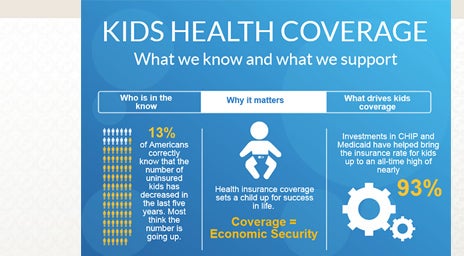
The number of uninsured children continued to decline in 2012. Although children are covered at much higher rates than most adults, they still lag behind seniors. Read CCF’s 50-state analysis “Children’s Health Coverage on the Eve of the Affordable Care Act” by clicking above.
-
The New TennCare Waiver Proposal: What Is The Impact On Children?
This issue brief discusses the TennCare program and proposed amendments, submitted to the federal government in September 2004 and February 2005, to the state’s Section 1115 Medicaid waiver. It shows that although many of the proposed restrictions in benefits and cuts in eligibility explicitly apply to adults and not to children, the state also seeks…
-
Issues to Consider in Governor Bush’s “Florida Medicaid Modernization Proposal”
This issue brief discusses Florida Governor’s Medicaid Modernization Proposal (released in January 2005), describing how the plan envisions that Medicaid costs will be reduced, how the new system will work, and what it will mean for beneficiaries and providers.
-
New Developments in Medicaid Coverage: Who Bears Financial Risk and Responsibility?
This issue brief provides an overview of federal Medicaid waiver activity and reviews the implications for coverage and access to care. It explores how waivers give states federal approval to alter the way they provide coverage and/or deliver services to low-income populations.