Marketplace
-
Lots of Questions but Few Answers: NAIC’s 2017 Summer Meeting
Originally posted on CHIRblog. For those who follow the fate of the Affordable Care Act marketplaces, it’s hard to escape the daily reports of the status of federal funding for cost-sharing reductions(CSR), the subsidies that lower out-of-pocket costs for low-income marketplace enrollees. The Trump administration won’t commit to funding the reimbursements to insurers for the rest of 2017…
-
Federal Funding Expiration Has Utah Health Groups Concerned
KUER By Erik Neumann September 30th marks the end of the federal government’s fiscal year. Local healthcare advocates are concerned because it’s the time when federal funding for two health programs in Utah is set to expire. …. Jessie Mandle is a Senior Health Policy Analyst at Voices for Utah Children. “Just given the overall…
-
New Pediatric Quality Core Measure Set Released by Collaborative of Public and Private Payers
About a year and a half ago, CMS, commercial health plans, Medicare and Medicaid managed care plans, purchasers, physician and other health-related professional groups, and consumers teamed up to reach consensus on core quality measures that would be reported across payers in the public and private sectors. The initiative, known as the Core Quality Measures…
-
Unexpected Defeat of Repeal Bill Doesn’t Mean End of Threats to ACA Health Coverage
In the wake of the surprise defeat of the Senate’s effort to repeal and replace the Affordable Care Act (ACA), President Trump tweeted: “As I said from the beginning, let ObamaCare implode, then deal. Watch!” The Trump administration does in fact have considerable ability to undermine and even “implode” the ACA’s insurance marketplaces, independent of Congress.…
-
Insurer Q2 Earnings Reports Being – How Will Companies React to Federal Uncertainty?
By Emily Curran, Georgetown University Center on Health Insurance Reform On July 18, Unitedhealthcare reported its second quarter (Q2) financial earnings, kicking off the Q2 cycle in which health insurers will announce their quarterly results, detail major financial gains and losses, and provide insight into how they expect to perform over the following quarter. While the audience…
-
States at Risk = Children and Families at Risk
It is a truth universally acknowledged that states don’t get sick, people get sick. But in a program like Medicaid, where the federal government and the states share in the cost of medical and long-term care services that people need, the fiscal fortunes of states and the health of beneficiaries are inextricably linked. If the…
-
Nation’s Progress on Children’s Health Coverage Imperiled
On November 9th I blogged about what the election results could mean for child and family coverage. As readers of Say Ahhh! know, the nation made extraordinary progress in reducing the rate of uninsured children to under 5%, This progress is thanks to Medicaid, the Children’s Health Insurance Program (CHIP), and the Affordable Care Act (ACA). All three…
-
Medicaid: Welcoming Americans with Pre-existing Conditions since 1965
The White House and the Republican Leadership in the House are continuing to look for enough votes to pass a bill to “repeal and replace” the Affordable Care Act (ACA). A number of Republican Members opposed to the bill have expressed specific concern about new amendment that would allow states to undo the ACA’s protections…
-
The Affordability Equation: The Conversation about ACA Subsidies Must Consider Premiums and Cost Sharing at the Same Time
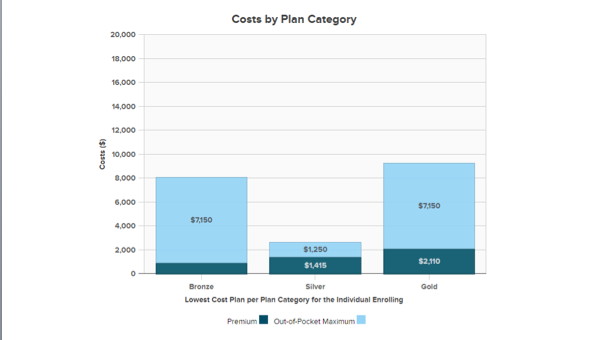
By Hilary Dockray, Social Interest Solutions As the debate about the Affordable Care Act (ACA) continues – Repeal? Replace? Repair? – it is important to remember that the ACA was designed to work as a whole and that disassembling pieces of it would be unwise. But the national conversation continues to deal separately with two…
-
What’s at Stake if Essential Health Benefits are Scrapped? Pediatric Benefits, Protection from Lifetime Limits
As House leaders scramble to get enough votes to send the American Health Care Act to the Senate, there is a lot of horse-trading going on. None of it to the benefit of kids enrolled in Medicaid or private insurance. The most recent Affordable Care Act provision on the chopping block is the Essential Health…
-
Eliminating Essential Health Benefits Will Shift Financial Risk Back to Consumers
Congress is debating the American Health Care Act, a plan to repeal and replace parts of the Affordable Care Act (ACA). The Act does not make changes to the Essential Health Benefits (EHB), ten categories of coverage that all new plans in the individual and small group markets must include in their plans. But the…
-
CHIR Expert Testifies Before the House Committee on Small Business Regarding Enhancements to the ACA
By Emily Curran and Dania Palanker, originally posted on CHIRblog On February 7, the House Committee on Small Business held a hearing titled, “Reimagining the Health Care Marketplace for America’s Small Businesses,” to discuss the challenges small businesses are facing in the health insurance marketplaces and to offer potential solutions for the next phase of…
-
Affordable Care Act Repeal Efforts Would Impact State Laws, Too
By Kevin Lucia and Katie Keith, originally posted on CHIRblog With much of the attention over ACA repeal efforts focused on Washington DC, it’s easy to forget that repeal-and-replacement efforts would significantly affect state approaches to insurance regulation. This is especially true in the 32 states and D.C. that have adopted state-level ACA protections. While…
-
Risky Business: Health Actuaries Assess the Individual Market and Rates
By Rachel Schwab, originally posted on CHIRblog Health reform is often a series of what-ifs. As we wade into the uncertainty of congressional action, Executive Orders, and “the greatest replacement plan ever,” consumers and insurers alike have to hedge their bets and carefully calculate the impact of a number of unknown outcomes. Unfortunately sometimes it…
-
Uncertain Future for the Affordable Care Act Leads Insurers to Rethink Participation, Prices
By Sabrina Corlette, Kevin Lucia, Justin Giovannelli and Dania Palanker, originally posted on CHIRblog The Affordable Care Act (ACA) is facing an uncertain future, with a new President and Congress committed to its repeal. Upcoming policy debates could have a dramatic impact on the individual health insurance market, especially the ACA’s marketplaces. While millions of…
-
Prior to the ACA, Where You Lived Determined How Accessible and Affordable Coverage Would Be
By Sandy Ahn, originally posted on CHIRblog Before the Affordable Care Act (ACA), what state you lived in determined how easily you could purchase a health plan, the price, and what the plan would cover in the individual market. Rules varied by state, but one common fact was that insurers could use your health status…
-
Complicated Cassidy-Collins Plan to Replace ACA Falls Short
With pressure building around repealing the ACA without a replacement plan, various “replacement” plans are starting to pop up – most recently this bill from Senators Cassidy and Collins. Sarah Lueck at the Center on Budget and Policy Priorities posted a thoughtful analysis of the bill’s key provisions and Timothy Jost offers even more details…
-
Senators’ ACA Replacement Won’t Likely Give States, Patients the Choices They Seek
By Sarah Lueck, Center on Budget and Policy Priorities Senators Bill Cassidy and Susan Collins say their new proposal to replace the Affordable Care Act (ACA) would allow people who like the coverage they have to keep it. But now that we have more details about the proposal, it’s hard to see how that could…
-
What Does President Trump’s Executive Order Mean for the Affordable Care Act?
As you may have heard, President Trump issued an executive order about the Affordable Care Act (ACA) on his inauguration day, but what’s been less clear is what exactly it means. Can the President repeal the ACA by executive order? The short answer is no. The ACA became law when it was passed by Congress…
-
What Does Senate Passage of the Budget Mean for Children and Families?
Early this morning the Senate passed its fiscal year 2017 budget, with a vote of 51-48. The budget now heads to the House for consideration and a vote, which is expected tomorrow. But what does the budget say, and more importantly, what does it mean for children and families? The budget establishes funding levels for…