All
-
New Toolkit Highlights ARPA Funding Opportunities for Maternal and Early Childhood Health Priorities
The American Rescue Plan made billions available for state and local governments to respond to the COVID-19 pandemic, including significant investments in programs that support children and families. The National Collaborative for Infants and Toddlers (BUILD) recently released an important new toolkit to help state advocates and policymakers make sense of funding opportunities through the…
-
One Year of Postpartum Medicaid and CHIP Coverage Included in House Budget Reconciliation Plan
An important policy change to advance maternal health equity secured a spot in the Build Back Better Act, the budget reconciliation legislation currently under consideration in Congress. Pregnant people covered by Medicaid and CHIP would receive a full year of postpartum coverage, regardless of which state they live in. The bill requires that all states…
-
Medicaid Managed Care for Foster Care Children and Youth: A Natural Experiment with Little Transparency
There’s a natural experiment underway involving a highly vulnerable population: children and youth in foster care. The experiment is a test of whether MCO/FCs outperform other ways of furnishing needed health care to this population. No, MCO/FCs are not a soccer team in the English Premier League. The initialism stands for Medicaid managed care organizations…
-
Transparency in Medicaid Managed Care for Children and Youth in Foster Care
Executive Summary Children and youth in foster care are among the most vulnerable populations covered by Medicaid. When children and youth enter the child welfare system, they are often not up to date on routine care, and many have unrecognized and untreated medical needs. In addition, the experience of removal from a child’s biological family,…
-
MACPAC Research Shows Closing the Continuous Coverage Gap for Kids is Within Reach
I was delighted to see MACPAC’s recent examination of continuous coverage and churn in Medicaid and CHIP. It was the first such analysis I’ve seen using data from the Transformed Medicaid Statistical Information System (T-MSIS) from 42 states and D.C. While the analysis includes all non-elderly Medicaid enrollees, I’m going to focus mostly on the…
-
Why is Medicaid/CHIP Continuous Eligibility So Important for Kids?
As readers of SayAhhh! know, the number of uninsured kids was going down for many years, but during the Trump administration starting going back up – rising to 5.7 percent child uninsured rate in 2019. While children are insured at higher rates than non-elderly adults, they still lag considerably behind seniors – who with Medicare…
-
Retroactive Coverage Waivers: Coverage Lost and Nothing Learned
If you took cooking classes for more than two decades but still couldn’t boil water, wouldn’t you reconsider your lesson plan? Using section 1115 demonstrations, the Department of Health and Human Services (HHS) can grant states waivers of federal Medicaid requirements, if and only if, the waivers enable the states to conduct health coverage experiments…
-
A Round-Up of Current Child Health Dashboards
As regular readers may know, we at CCF are big fans of a good dashboard to highlight Medicaid/CHIP data. Well-designed dashboards can pack a wealth of information about a state’s enrollment, quality of care, utilization rates, and managed care performance into a central and easily accessible location. Dashboards also provide transparency, which can help level…
-
Building a Better Transparency Mousetrap: Recommendations to Optimize Hospital and Health Plan Price Disclosures
By Sabrina Corlette, Megan Houston, Maanasa Kona, Rachel Schwab, and Nia Gooding from the Center on Health Insurance Reforms at Georgetown University’s Health Policy Institute. High and rising health care costs are projected to consume 20 percent of the U.S. economy by 2027, squeezing workers’ wages, reducing our economic competitiveness, and forcing difficult budgeting decisions for federal and…
-
New Medicaid State Planning Grants for Mobile Crisis Intervention Services
This week, the Centers for Medicare & Medicaid Services (CMS) announced that it awarded $15 million in planning grants to 20 state Medicaid agencies to support expanding access to community-based mobile crisis intervention services for Medicaid beneficiaries. As mentioned in our previous blog, the American Rescue Plan created a new state option for state Medicaid…
-
Loss of Medicaid After the PHE Will Likely Exceed 15 Million Estimated by Urban
The Urban Institute recently released a new report projecting that Medicaid and CHIP will have provided access to health care (and peace of mind) for an additional 17 million children and adults by the end of 2021. The increase is largely due to the COVID-related requirement that states keep Medicaid enrollees continuously covered during the…
-
CMS, FNS Announce Additional Demonstrations to Evaluate Impacts of Data Sharing
On Friday, the Centers for Medicare & Medicaid Services (CMS) posted a Center for Medicaid and CHIP Services (CMCS) Informational Bulletin to notify state Medicaid agencies of an additional demonstration to encourage and analyze interagency data sharing to help eligible students access free and reduced-price school meals. The new demonstration, issued by the U.S. Department…
-
The Poorest Children Are The Ones That Lost Health Insurance During The Pandemic
While we won’t be able to do our in-depth analysis of children’s health coverage trends this fall due to problems collecting American Community Survey data during the pandemic, the Census Bureau did release a report on national trends in health insurance coverage in 2020 using the Current Population Survey Annual Social and Economic Supplement. Overall,…
-
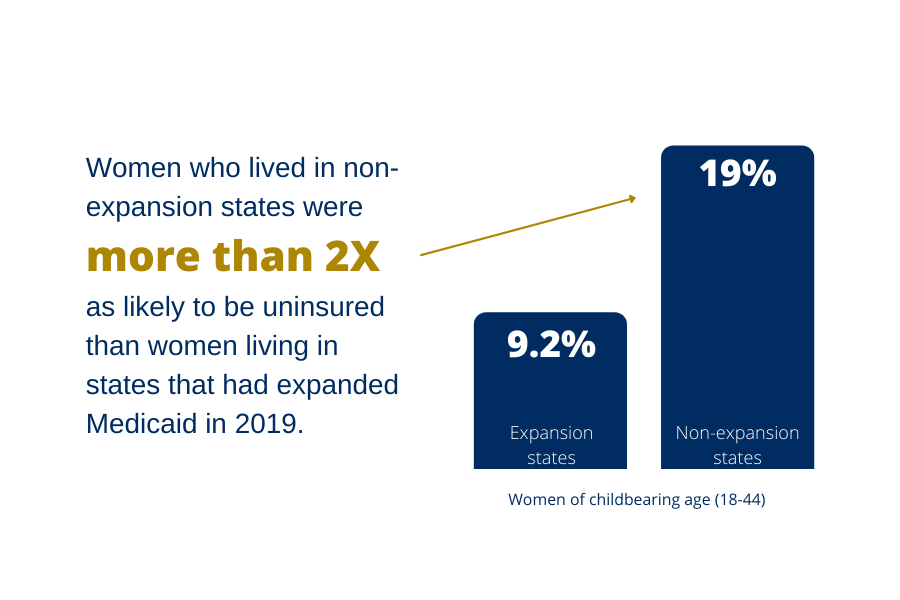
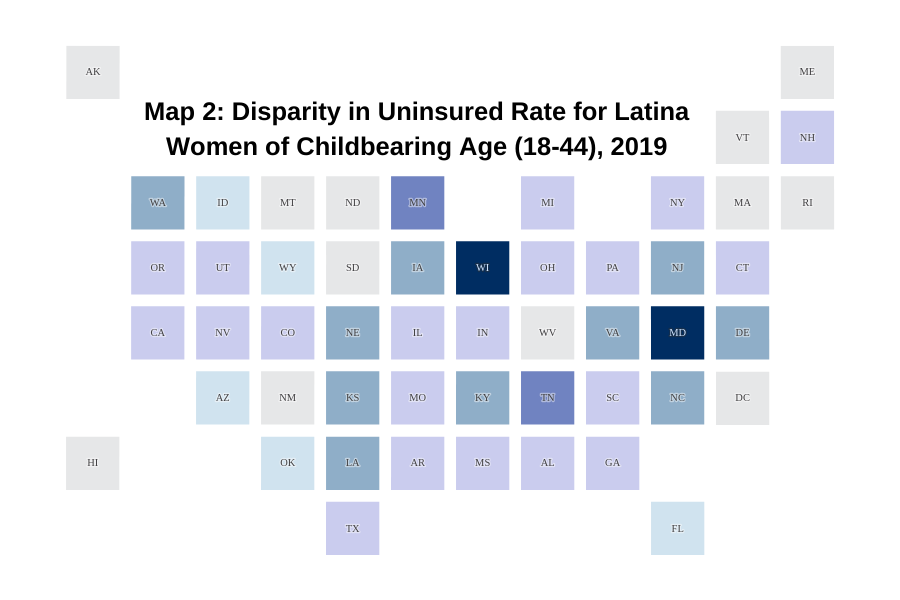
Medicaid Expansion Narrows Maternal Health Coverage Gaps, But Racial Disparities Persist
Introduction The United States is experiencing a maternal mortality crisis and has the highest maternal mortality rate of any industrialized country in the world.8 In 2019, more than 750 women died of maternal causes in the United States while pregnant or within 42 days after the end of pregnancy, data from the Centers for Disease…
-
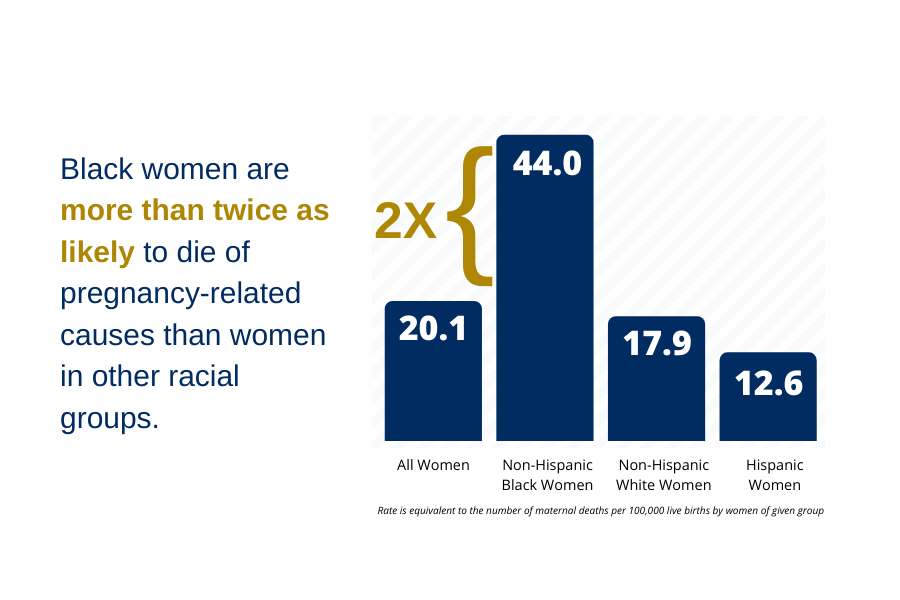
Federal and State Policymakers Must Address Alarmingly High Maternal Mortality Rates and Racial Disparities
The United States has an unacceptably high maternal mortality rate and it is getting worse. The latest data from the CDC shows that maternal mortality increased significantly between 2018 and 2019, topping out at the highest recorded rate since the agency began tracking the rate more than 30 years ago. A country’s maternal mortality rate…
-
Medicaid Expansion Narrows Maternal Health Coverage Gaps, But Racial Disparities Persist (Online Chartbook)
Introduction The United States is experiencing a maternal mortality crisis. The nation has the highest maternal mortality rate of any industrialized country in the world. More than 750 women died of maternal causes in the United States while pregnant or within 42 days after the end of pregnancy in 2019. The same year, Black women…
-
House Energy and Commerce Committee Releases Text of Medicaid/CHIP Reconciliation Provisions
Last night, legislative language was released by the House Energy and Commerce Committee (which has jurisdiction over Medicaid and the Children’s Health Insurance Program (CHIP)) – the “Build Back Better Act”. The Committee plans to “mark up” these provisions starting Monday — so things are now moving quickly inside the Beltway to move forward a…
-
Transparency in Medicaid Managed Care: Findings from a 13- State Scan
Report Download the report. Appendix Online appendix tables. Blog Read the blog.
-
Scan of 13 States’ Medicaid Managed Care Organizations Uncovers Need for More Transparency
At the beginning of July, North Carolina became the fortieth state to make the switch from fee-for-service (FFS) to Medicaid managed care. With the new system barely off the ground, a recent news report highlighted the stories of providers facing denied prior authorizations, delayed payments, and excessive paperwork. One provider stressed that she hadn’t received…
-
Medicaid Expansion Narrows Maternal Health Coverage Gaps, But Racial Disparities Persist (Appendix)
Appendix A: Uninsured Rate for Reproductive Age Women (18-44) by State and Race, 2019 Appendix B: Uninsured Rate for Reproductive Age Women (18-44) by State and Ethnicity, 2019 Appendix C: Uninsured Rate for Reproductive Age Women (18-44) by State, 2013-2019 Appendix D: Number of Uninsured Reproductive Age Women (18-44) by State, 2013-2019 Back to report