Blog
-
House Energy and Commerce Committee Medicaid Provisions Released, Mark-Up Set for Tuesday
Statement by Joan Alker, Executive Director of the Georgetown University Center for Children and Families, regarding Medicaid provisions included in the House Energy and Commerce budget reconciliation bill text scheduled for mark-up this week “The House Energy and Commerce Committee released the text of its portion of the reconciliation bill at around 10 p.m. last…
-
CCF Marks 20th Anniversary as Ominous Cuts to Medicaid Loom
The Center for Children and Families turned 20 on Monday! I marked this milestone as a guest on the NPR 1A program, explaining the role of Medicaid and Congressional proposals to cut it deeply. Many of the listeners needed no convincing that Medicaid was important, indeed life-sustaining for them and their families. One mother called…
-
Research Update: Estimates of State Impact of Medicaid Cuts
As we have written about extensively on Say Ahhh!, Medicaid is facing large cuts in the budget reconciliation process with hundreds of billions of dollars on the chopping block. It’s unclear how policymakers will meet the hundreds of billions in cuts assigned to programs under the jurisdiction of the House Energy and Commerce Committee but…
-
Rescinding the Eligibility and Enrollment Rule Would Thwart Efforts to Improve Efficiency in Medicaid and Efforts to Reduce Improper Payments
Congressional leaders have repeatedly said they are going to protect the most vulnerable from a loss of Medicaid coverage and focus on addressing “waste, fraud, and abuse” but rescinding the Eligibility and Enrollment rule would do neither. The Eligibility and Enrollment Rule (E&E rule) finalized by the Biden Administration in April 2024 is on the…
-
Federal Medicaid Cuts Would Harm State GDP, Credit Ratings, Jobs and Health Systems
Medicaid is the nation’s largest health insurer, providing over 70 million children, parents, people with disabilities, and low-income seniors with health coverage. It’s clear that the major cuts to Medicaid funding currently under consideration in Congress would impact the health care system as a whole – health providers would have fewer insured patients, lower payment…
-
Thinking Frequent Medicaid Redeterminations Won’t Hurt Children’s Health Insurance? Take a look at What Happened in Texas.
Nearly half (47%) of the 79 million people who get their health insurance through Medicaid are children. To ensure continuity of coverage for children, Congress took action to protect children’s access to health insurance by requiring states to provide a full year of continuous coverage in Medicaid to children beginning in 2024. But will children’s…
-
Combined Impact of Medicaid Cuts Under Consideration Would End Expansion and Take Away Coverage for Nearly 21 Million Low-Income People
In analyzing the draconian Medicaid cuts under consideration by House Republicans for inclusion in budget reconciliation legislation, it is often easier to examine each specific proposal in isolation. But it is important to also take a step back and look at how these proposals would interact with each other. In doing so, it is virtually…
-
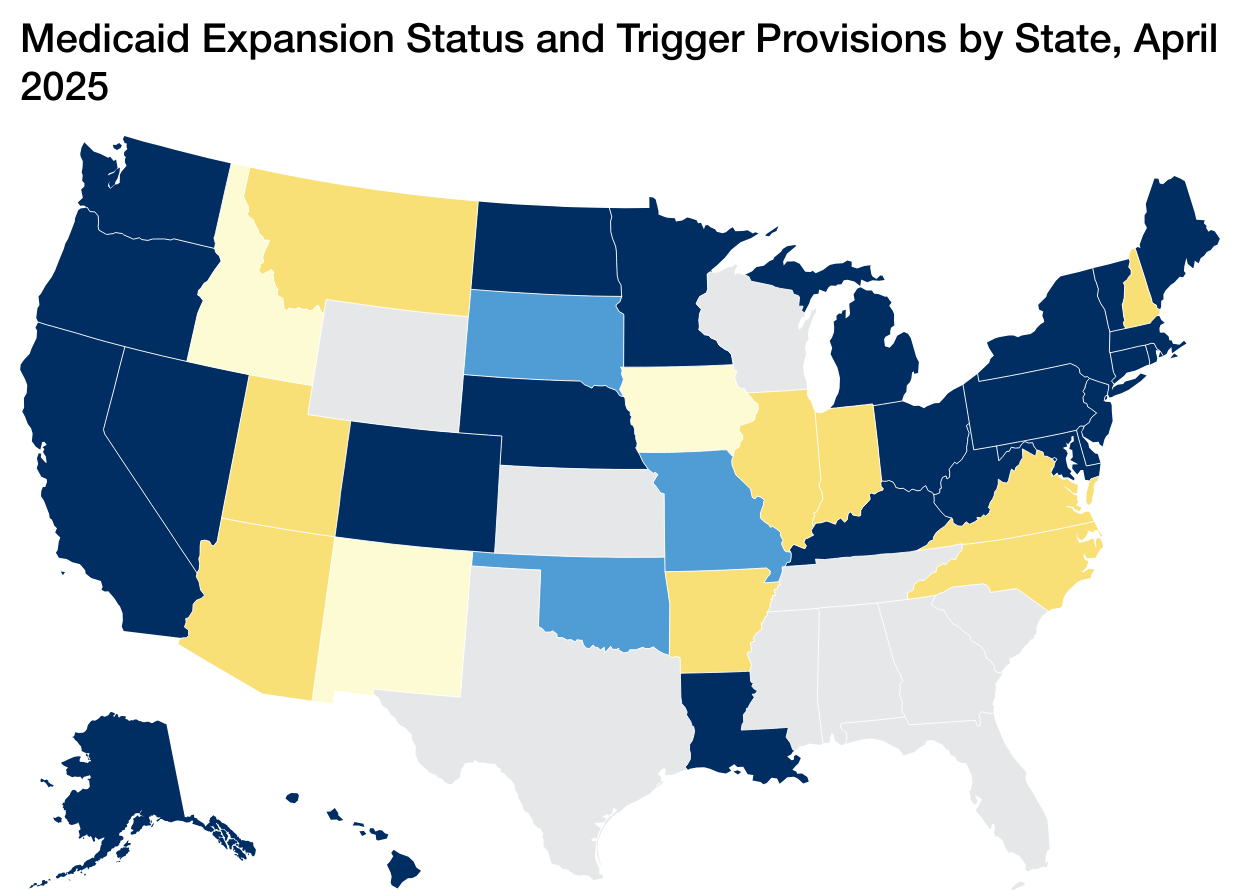
How Would Changes to Federal Medicaid Expansion Funding Impact People in “Trigger” States and Those with Expansion Enshrined in State Constitutions?
Congress is currently considering draconian cuts to Medicaid that would mean millions of low-income Americans lose access to affordable health care. But both the type of federal cuts and how the joint state-federal Medicaid program operates in each state mean that the impact on people living in different states would vary considerably. The major difference…
-
Medicaid Work Reporting Requirements – Even with Exemptions – Will Have Significant Consequences for People with Substance Use Disorders
As highlighted on Say Ahhh! earlier this month, Congress continues to consider imposing work reporting requirements on people who get their health coverage through Medicaid. As a practical matter, one thing is clear: the only purpose of this proposal is to terminate Medicaid coverage for the most vulnerable Americans. Work reporting requirements in public benefit…
-
Cuts to ACA’s Medicaid Expansion Under Consideration by Congress would Lead to Large Coverage Losses Hitting some States Harder than Others
Next week, the House Energy and Commerce Committee is expected to consider fast-track budget reconciliation legislation that could cut Medicaid by as much as $880 billion over 10 years or more. This level of cuts to Medicaid is unprecedented and if enacted would mean tens of millions of children, parents, seniors, people with disabilities and…
-
New State-by-State Estimates of the Federal Funding Cuts from Imposing a Per Capita Cap on the Medicaid Expansion
I previously warned about how imposing a per capita cap on the Medicaid expansion would effectively lead to a sharp cut to the current 90 percent matching rate for the 40 states and the District of Columbia that have adopted the expansion. This would shift significant costs to states, force them to drop their expansions…
-
Governors and State Agencies Estimate Impact of Potential Federal Medicaid Cuts on State Budgets
With Congress returning to DC, we expect to learn more about the Medicaid cuts under serious consideration as part of the budget reconciliation process fairly soon. But, in the meantime, states are starting to crunch some numbers to gauge the impact of the potential Medicaid cuts on their state programs and state budgets. The analysts…
-
The U.S. Already Has a Child Care Crisis: Medicaid Cuts Would Make it Much Worse
Working parents don’t need survey data to tell them our nation is facing a serious child care crisis. They are reminded every time they pay their child care bill that often exceeds even the high cost of rent. Expectant parents learn about it when they add their names to long waitlists even before their child…
-
Medicaid Provides Stability During Turbulent Economic Times
Medicaid is the largest source of public health insurance coverage, covering nearly 80 million people, so it goes without saying that Medicaid is incredibly important all of the time. However, Medicaid is especially important during economic downturns. When families face tough times, Medicaid is there to provide the extra support they need to get by.…
-
Black Maternal Health Week 2025: Healing Legacies: Strengthening Black Maternal Health Through Collective Action and Advocacy
The Black Mamas Matter Alliance (BMMA) founded Black Maternal Health Week, which is celebrated annually from April 11 to 17 during National Minority Health Month. Black Maternal Health Week amplifies the voices of Black mamas and brings awareness to Black-led maternal health and reproductive justice organizations that advocate for policy change and community-based solutions to…
-
Medicaid Work Reporting Requirements Under Consideration by Congress Put People with Disabilities, Cancer, and Those Impacted by the Opioid Crisis at Risk
As Congress considers cutting Medicaid to finance President Trump’s legislative agenda, one of the proposals that appears to have a great deal of support from Republicans is the imposition of a punitive work reporting requirement as a condition of Medicaid eligibility. I have long held the view that this approach is deeply flawed for a…
-
Voices from Ohio: The Harm of Medicaid Work Requirements
As Congress considers imposing a mandatory work reporting requirement (WRR) on adults in Medicaid as part of their drive to impose large federal cuts to Medicaid, Ohio is the first state during the second Trump Administration to request Section 1115 demonstration authority to impose a WRR on its ACA Medicaid expansion group. Ohioans are speaking…
-
Medicaid Cuts Would Weaken Early Intervention for Infants and Toddlers with Disabilities and Developmental Delays
Yesterday the House reconfirmed its intent to make massive cuts to Medicaid after the Senate rubber stamped the plan last week. Despite repeated polls – including one from President Trump’s polling firm Fabrizio Ward – showing large majorities of American voters do not want to see Medicaid cut, Congress is moving full steam ahead to…
-
Supporting Caregivers Means Supporting Medicaid
In Partnership with While many mistakenly believe Medicare is the primary source of health coverage for home or nursing care over a long period, the reality is that Medicaid serves as the backbone of our country’s long-term care system. Medicaid is the primary source of funding for long-term care in the U.S., paying well over…
-
Medicaid, SNAP, and WIC Work Together to Help Families – Draconian Cuts Would Decrease Access to All
The National WIC Association, Urban Institute, and the Commonwealth Fund have all recently written about the economic impact of cuts to the Supplemental Nutrition Assistance Program (SNAP) and the Women, Infants, and Children (WIC) program. WIC is a supplemental nutrition program that is specifically for moms and babies. In January, the media released a leaked…