Research & Reports
-
A Guide for Child Health Advocates: Medicaid Managed Care Accountability Through Transparency
Medicaid, Managed Care, and Transparency Medicaid is the nation’s largest health insurer for children—over 35 million at last count—and pays for nearly half of the nation’s births. It offers a comprehensive pediatric benefit—Early and Periodic Screening, Diagnostic, and Treatment (EPSDT) services—for children and comprehensive maternity care for pregnant women. In most states, Medicaid agencies contract…
-
Urgent Action Needed to Catch Up on Routine Childhood Vaccinations
Introduction Vaccines are a safe and effective method of reducing the burden of infectious disease. On an individual level, they prevent severe illness, death, and long-term consequences of disease such as neurological disorders. On the community level, they forestall dangerous outbreaks of infectious disease and save money that would otherwise be spent on treating preventable…
-
Expanding Medicaid Would Help Close Coverage Gap for Latino Children and Parents
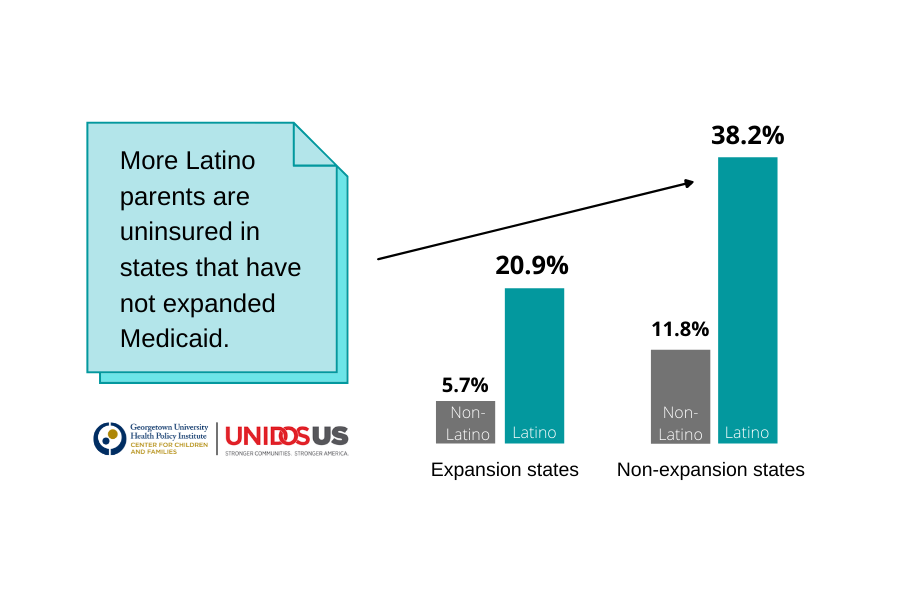
Introduction The Affordable Care Act (ACA) has lowered the uninsured rate for children and families nationally, but its impact varies across the country based on whether a state has adopted the ACA’s Medicaid expansion to cover more adults.1 For Latino children and families, Medicaid serves an especially important role; while Latinos are more likely to…
-
A Profile of Florida’s Low-Wage Uninsured Workers
The recently enacted American Rescue Plan Act of 2021 (ARP) includes new large financial incentives for states to extend health insurance coverage to low-wage workers and other adults earning less than $17,775 a year.¹ These incentives apply to regular spending in a state’s Medicaid program and offer a five-percentage point across the board increase in the…
-
A Profile of South Dakota’s Low-Wage Uninsured Workers
The recently enacted American Rescue Plan Act of 2021 (ARP) includes new large financial incentives for states to extend health insurance coverage to low-wage workers and other adults earning less than $17,775 a year.¹ These incentives apply to regular spending in a state’s Medicaid program and offer a five-percentage point across the board increase in the…
-
A Profile of South Carolina’s Low-Wage Uninsured Workers
The recently enacted American Rescue Plan Act of 2021 (ARP) includes new large financial incentives for states to extend health insurance coverage to low-wage workers and other adults earning less than $17,775 a year.¹ These incentives apply to regular spending in a state’s Medicaid program and offer a five-percentage point across the board increase in the…
-
Getting Back on Track: A Detailed Look at Health Coverage Trends for Latino Children
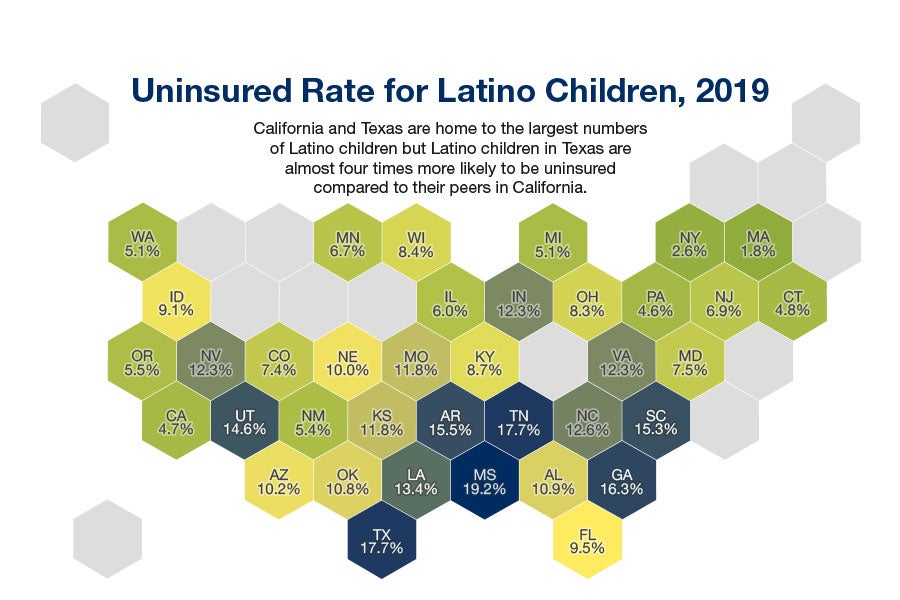
Introduction From 2008 to 2016, the Latino child uninsured rate fell steadily, eventually achieving a historic low of 7.7 percent in 2016.1 Although this rate was still higher than that for non-Latino children, the decline signaled steady progress towards narrowing health coverage disparities between Latino children and their peers. However, as the overall child uninsured…
-
A Profile of Texas’s Low-Wage Uninsured Workers
The recently enacted American Rescue Plan Act of 2021 (ARP) includes new large financial incentives for states to extend health insurance coverage to low-wage workers and otheradults earning less than $17,775 a year.¹ These incentives apply to regular spending in a state’s Medicaid program and offer a five-percentage point across the board increase in the…
-
A Profile of Kansas’s Low-Wage Uninsured Workers
The recently enacted American Rescue Plan Act of 2021 (ARP) includes new large financial incentives for states to extend health insurance coverage to low-wage workers and other adults earning less than $17,775 a year.¹ These incentives apply to regular spending in a state’s Medicaid program and offer a five-percentage point across the board increase in the…
-
Low-Wage Uninsured Workers: State Profiles
The recently enacted American Rescue Plan Act of 2021 (ARP) includes new large financial incentives for states to extend health insurance coverage to low-wage workers and other adults earning less than $17,775 a year. These incentives apply to regular spending in a state’s Medicaid program and offer a five-percentage point across the board increase in…
-
A Profile of Tennessee’s Low-Wage Uninsured Workers
The recently enacted American Rescue Plan Act of 2021 (ARP) includes new large financial incentives for states to extend health insurance coverage to low-wage workers and other adults earning less than $17,775 a year.¹ These incentives apply to regular spending in a state’s Medicaid program and offer a five-percentage point across the board increase in the…
-
A Profile of Wyoming’s Low-Wage Uninsured Workers
The recently enacted American Rescue Plan Act of 2021 (ARP) includes new large financial incentives for states to extend health insurance coverage to low-wage workers and other adults earning less than $17,775 a year.¹ These incentives apply to regular spending in a state’s Medicaid program and offer a five-percentage point across the board increase in the…
-
A Profile of Alabama’s Low-Wage Uninsured Workers
The recently enacted American Rescue Plan Act of 2021 (ARP) includes new large financial incentives for states to extend health insurance coverage to low-wage workers and other adults earning less than $17,775 a year.¹ These incentives apply to regular spending in a state’s Medicaid program and offer a five-percentage point across the board increase in the…
-
A Profile of Georgia’s Low-Wage Uninsured Workers
The recently enacted American Rescue Plan Act of 2021 (ARP) includes new large financial incentives for states to extend health insurance coverage to low-wage workers and other adults earning less than $17,775 a year.¹ These incentives apply to regular spending in a state’s Medicaid program and offer a five-percentage point across the board increase in…
-
A Profile of Missouri’s Low-Wage Uninsured Workers
The recently enacted American Rescue Plan Act of 2021 (ARP) includes new large financial incentives for states to extend health insurance coverage to low-wage workers and other adults earning less than $17,775 a year.¹ These incentives apply to regular spending in a state’s Medicaid program and offer a five-percentage point across the board increase in the…
-
A Profile of North Carolina’s Low-Wage Uninsured Workers
The recently enacted American Rescue Plan Act of 2021 (ARP) includes new large financial incentives for states to extend health insurance coverage to low-wage workers and other adults earning less than $17,775 a year.¹ These incentives apply to regular spending in a state’s Medicaid program and offer a five percentage point across the board increase…
-
A Profile of Mississippi’s Low-Wage Uninsured Workers
The recently enacted American Rescue Plan Act of 2021 (ARP) includes new financial incentives for states to extend health insurance coverage to low-wage workers and other adults earning less than $17,775 a year through Medicaid.¹ These incentives apply to regular spending in a state’s Medicaid program and offer a five percent across-the-board increase in the…
-
American Rescue Plan Act: Health Coverage Provisions Explained
On March 11, 2021, President Biden will sign into law the American Rescue Plan (ARP) Act of 2021 (H.R. 1319). The wide-ranging, critically needed COVID-19 relief legislation includes a number of key provisions that strengthen both public and private health insurance coverage. Some of the new provisions build on actions Congress previously took in earlier…
-
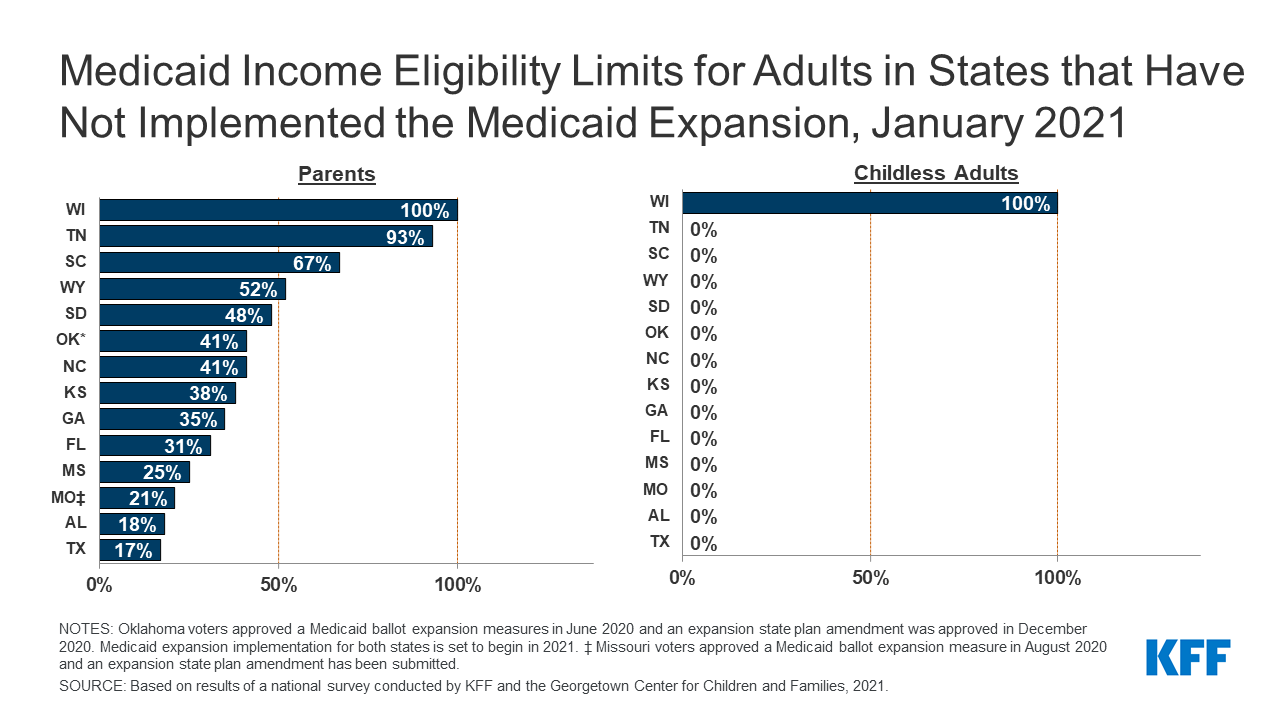
Medicaid and CHIP Eligibility, Enrollment, and Cost Sharing Policies as of January 2021: Findings from a 50-State Survey
Executive Summary During the coronavirus pandemic, Medicaid has played a key role in providing coverage to millions of people who have lost their jobs or their health coverage. In addition, provisions included in the Families First Coronavirus Response Act (FFCRA) and the Coronavirus Aid, Relief and Economic Security (CARES) Act require states to maintain eligibility…
-
Report Finds Medicaid Expansion Associated with Lower Child Uninsured Rates
Introduction Since its passage in 2010, the Affordable Care Act (ACA) has played a critical role in lowering the rate of uninsured children in America. A key part of the ACA’s success in this area was the Act’s expansion of Medicaid to more working-age adults. In 2016, just two years after the majority of states…