All
-
Health Coverage Trends for Infants and Toddlers Under Age 3
Key Findings Methodology Data Sources This brief from the Georgetown University Center for Children and Families (CCF) analyzes data from the U.S. Census Bureau’s American Community Survey (ACS) Public Use Microdata Sample (PUMS) for 2015-2024. Because of differences in sample size and data processing, the estimates published here may differ from estimates produced using other…
-
Almost All Custodial Parents, Caretaker Relatives Should Not be Impacted by Medicaid Work Reporting Requirements in 28 States
As states rush to implement complex new work reporting requirement provisions before January 2027, the new Interim Final Rule (IFR) released by the Centers for Medicare and Medicaid Services (CMS) has caused massive confusion. However, the IFR made important clarifications about which adults are not subject to work reporting requirements (WRRs), are excluded from WRRs,…
-
New Executive Order Undermines Child Health
On August 10, 2026, President Trump signed an executive order aimed at making major changes to federal vaccine policy. Among several other actions, this order would make major revisions to the childhood vaccination schedule, direct care providers to administer monovalent vaccines as soon as they are available (starting with splitting up the MMR (measles, mumps,…
-
Medicaid Managed Care: The Big Five in Q2 2026
The “Big Five” have announced their results for the calendar quarter ending June 30. They are, of course, the five publicly-traded companies with the largest presence in the Medicaid managed care market, together accounting for about half of all Medicaid enrollees: Centene Corporation, CVS Health/Aetna, Elevance Health, Molina Healthcare, and UnitedHealth Group. The Medicaid market…
-
Missouri Voters Reject Attempts to Limit Ballot Measures Affecting Issues Like Medicaid Expansion
This week, voters in Missouri soundly rejected two state constitutional amendment ballot measures proposed by the Legislature that had implications for issues such as Medicaid expansion and other health policy issues. Proposed Amendment 4 (defeated 80% to 20%) would have required future proposed constitutional amendments in Missouri to achieve an individual majority in every congressional district…
-
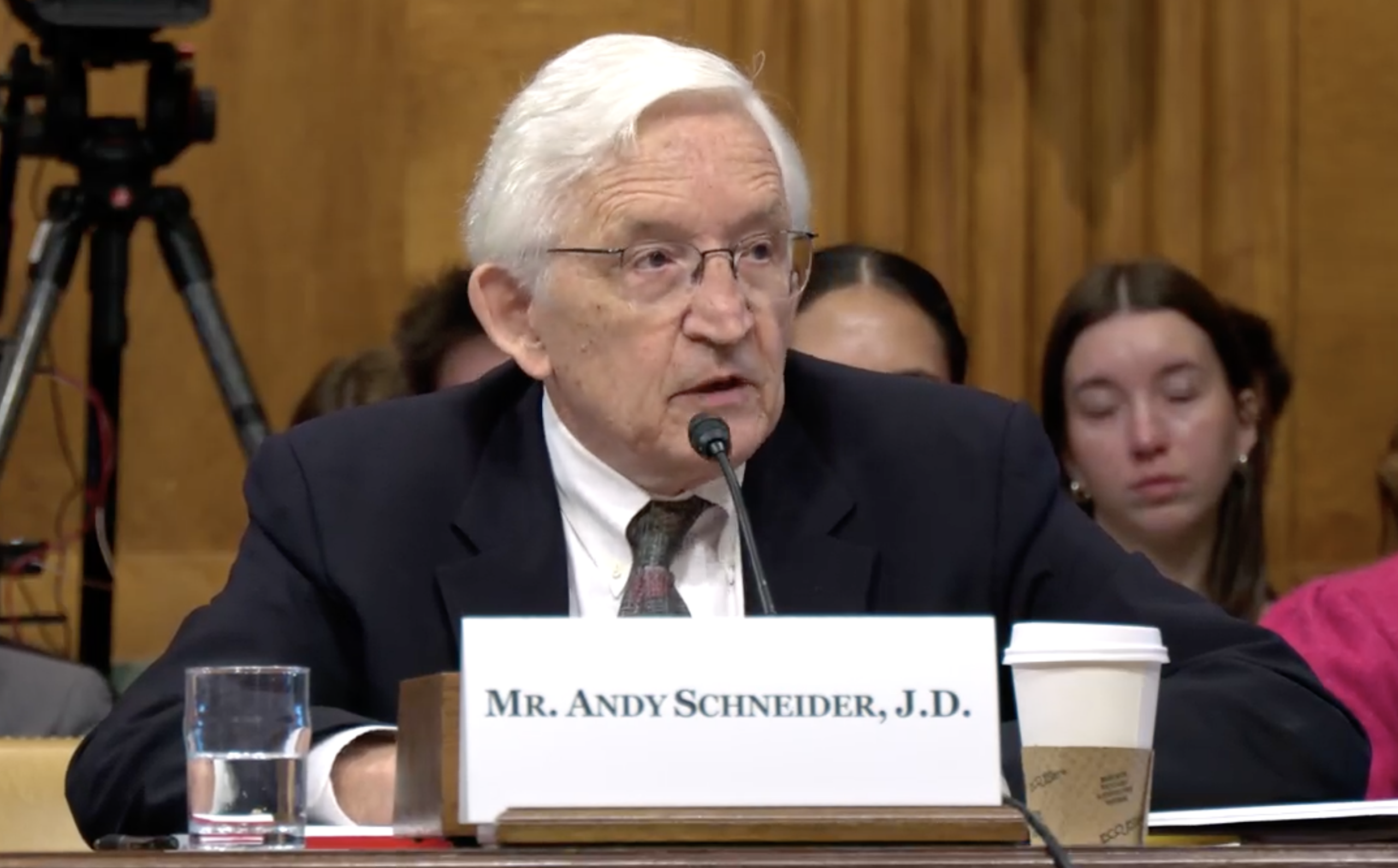
Testimony Presented at U.S. Senate Budget Committee “Medicaid the Reality” Hearing
Andy Schneider, J.D., Research Professor of the Practice, Georgetown University McCourt School of Public Policy Center for Children and Families, presented this testimony to the United States Senate Committee on Budget on August 4, 2026.
-
Early Childhood Educators Still Need Medicaid – Now More than Ever
Our brief on the critical role Medicaid plays for the early childhood education workforce has been re-published with new 2024 data, resources, and implications from the past year of federal actions, with the help of our partners, the Center for Law and Social Policy (CLASP), the National Association for the Education of Young Children (NAEYC),…
-
CCF Comments on Medicaid Work Reporting Requirements Interim Final Rule
The Georgetown University Center for Children and Families submitted the following comments to the Center for Medicare and Medicaid (CMS) and the U.S. Department of Health and Human Services (DHHS) regarding CMS’s Interim Final Rule (IFR) implementing H.R. 1-mandated Medicaid Work Reporting Requirements (WRRs). Read the Comments.
-
CCF Submits Comments on Medicaid Work Reporting Requirements Interim Final Rule
Today, CCF submitted public comments on CMS’s Interim Final Rule (IFR) implementing H.R. 1-mandated Medicaid Work Reporting Requirements (WRRs). As we’ve written about time and time again, WRR policies are harmful, create unnecessary barriers to coverage, and will result in coverage losses without actually supporting work. Nonetheless, H.R. 1 has required most states to impose…
-
Change to Census Data Processing Methods Threatens Health Policy Research and Federal Data Systems
On June 4, 2026, the Commerce Department issued Department Administrative Order (DAO) 216-26, Disclosure Avoidance for Statistical Products, which bans a class of privacy techniques called “noise infusion” in all data products coming out of the Census Bureau and the Bureau of Economic Analysis (BEA). This order, which was made effective immediately without opportunity for…
-
Weaponizing Fraud Against Medicaid in California and Minnesota: Another Quarter, Another Round of Deferrals
At a July 21 press conference, CMS Administrator Mehmet Oz announced that his agency was deferring payment of $1.1 billion in federal Medicaid matching funds to California and Minnesota “pending review of high-risk claims in crackdown on fraud.” The amount of the California deferral was $867.5 million; the Minnesota deferral, $199.0 million. CMS has previously taken…
-
Senator Kim Introduces Bill to Cover All Children and Young Adults
Last week, Sen. Andy Kim (D-NJ) introduced a bill called the “MediKids Act” (S. 5037), described as “guaranteed healthcare for every child in America.” Original cosponsors were Sens. Booker (NJ), Duckworth (IL), Lujan (NM) and Padilla (CA) – all Democrats and the bill was referred to the Senate Finance Committee. As regular readers of the…
-
CMS Issues New Rule Again Going Beyond H.R. 1 Requirements to Further Restrict State Use of Medicaid Provider Taxes
On July 21, 2026, the Centers for Medicare & Medicaid Services (CMS) issued a new proposed rule that would implement two of H.R. 1’s restrictions on states’ use of provider taxes to finance their share of Medicaid costs. H.R. 1 included three provider tax restrictions: (1) a prohibition on new provider taxes and increases in…
-
Trump Administration Issues Final Public Charge Rule, Ignores Public Comments on Harm to Children
On July 20, 2026, the U.S. Department of Homeland Security (DHS) issued final regulations lifting current rules used to determine whether an immigrant is likely to become a “public charge”. The final rule, which takes effect on September 18, eliminates a century of established policy, carefully calibrated to address policy issues and undefined terms in…
-
New Report Shows Coverage Gains for New Mothers—But Progress has Stalled with New Threats on the Horizon
A new report from the Urban Institute indicates that health insurance coverage among new mothers in the first year postpartum has improved significantly over recent years, but that progress has begun to stall. Using data from the Census Bureau’s American Community Survey (ACS), the researchers find that the uninsured rate among women ages 19 to…
-
New Report Examines How States Can Protect Pregnant/Postpartum Enrollees from Losing Health Coverage Due to Work Reporting Requirements (And Why We Should Still Be Worried)
As awareness has grown about the new Medicaid work reporting requirements (WRRs) that have already been put in place in some states but are mandated to begin January 1 of next year, it has created layers of confusion about who will be required to report work hours. Our new report on pregnant women and WRRs…
-
Webinar: Medicaid Connections: Maternal and Infant Health and Justice
Download the Audio Transcript As the nation’s largest payer for maternity care, Medicaid is a cornerstone for advancing reproductive justice and dismantling systemic health inequities. H.R.1 legislation directly impacts maternal and infant health. True reproductive and justice requires policymakers to optimize Medicaid by funding holistic, culturally centered and linguistically concordant care, including midwifery, doula and…
-
CCF Comments on State Directed Payments NPRM
The Georgetown University Center for Children and Families submitted the following comments to the Center for Medicare and Medicaid (CMS) and the U.S. Department of Health and Human Services (DHHS) regarding Medicaid Managed Care State Directed Payments and Medicaid Fee-for-Service Targeted Medicaid Practitioner Payments. Read the Comments
-
In-State Call Answer Rates for 988 Lifeline
The 988 Suicide and Crisis Lifeline went live in July 2022 to connect people experiencing mental health-related distress with trained counselors to provide help. Just as 911 is universally known for use during emergencies, like a heart attack or car accident, contacting 988 can be lifesaving for people experiencing a mental health crisis. The 988…
-
Medicaid Work Reporting Requirements: How Can States Protect Pregnant and Postpartum Women from Losing Health Coverage?
Overview Starting in January 2027, H.R. 1 requires every state that adopted the Affordable Care Act’s (ACA’s) Medicaid expansion to low-income adults (and select additional states) to implement work reporting requirements. These work reporting requirements (WRRs) predominantly affect those enrolled in the Medicaid expansion category—coverage for adults with incomes up to 138% of the federal…